
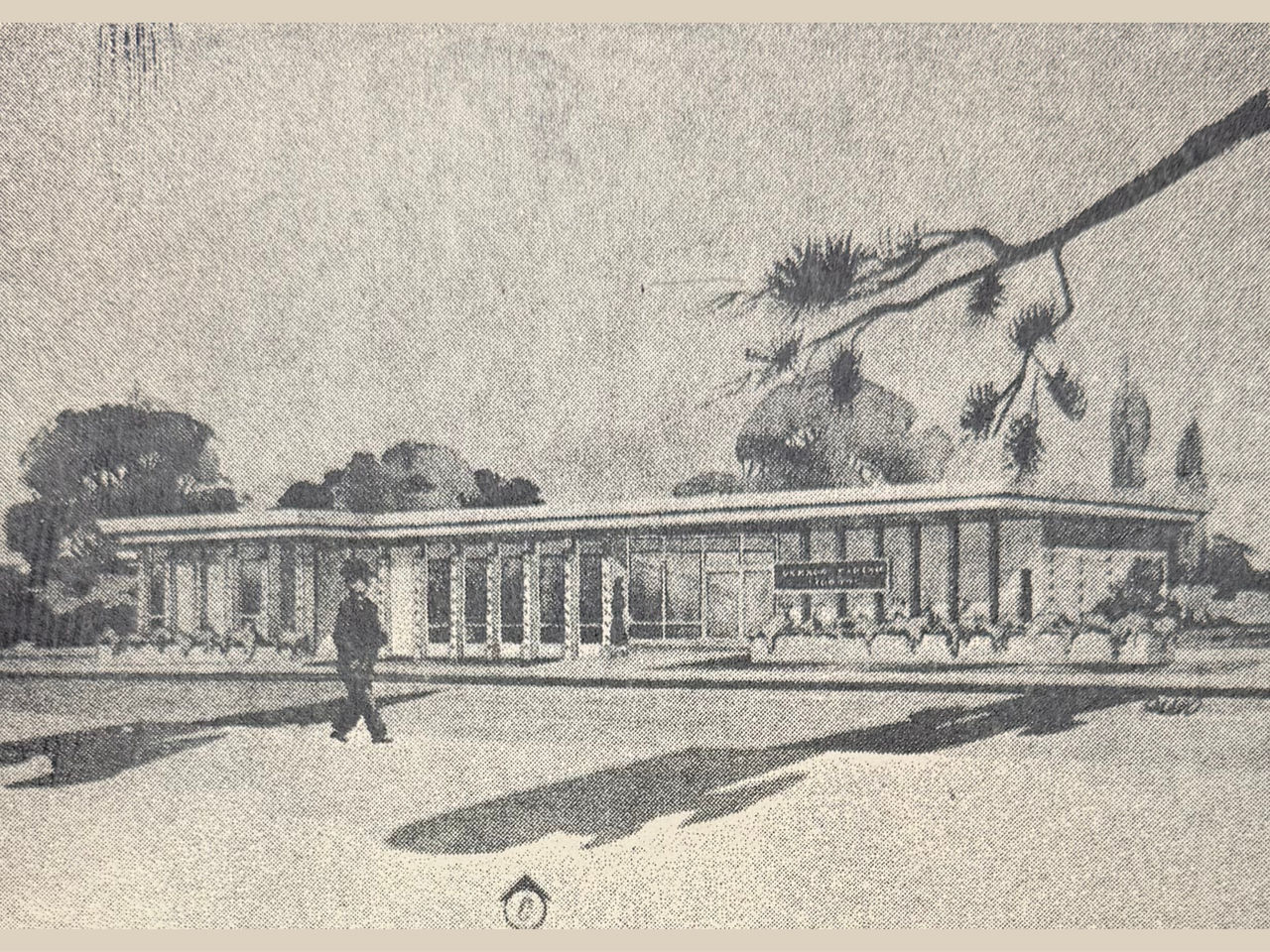
Funding for the demonstration reflected the larger philosophy of Louisiana’s public-library development. The State Library’s demonstration method placed much of the initial financial burden on the state rather than requiring a rural parish to finance an entire library system immediately. The State Library’s historical account explains that, under the demonstration model, the state supplied books, magazines, professional librarians, full-time assistants, and a bookmobile, while the local government was expected to provide necessities such as housing, furniture, equipment, utilities, and other local support. The 1956 Vernon Parish demonstration was also aided by the Library Services Act, a federal program that helped Louisiana expand library service into communities that previously lacked adequate service. State records specifically identify the Vernon Parish demonstration as beginning in November 1956 and being completed in 1957 with assistance from the Library Services Act program.
The goal, however, was never for Vernon Parish to depend permanently on state or federal demonstration money. The demonstration was designed to prove that a public library could work in Vernon Parish and that residents would value it enough to support it locally. State records report that local support of $1.86 per capita was voted as the demonstration progressed, while a later local historical account records that Vernon Parish voters approved a 3.5-mill tax for ten years in a special election held June 4, 1957, providing a permanent local funding mechanism after the demonstration period. These actions transformed the project from a temporary experiment into a locally supported public institution.
The bookmobile was particularly important to the success of the plan because Vernon Parish was—and remains—a geographically large, rural parish. The first bookmobile carried library materials to communities including Burr Ferry, Evans, Knight, Cottonwood, Anacoco, Hornbeck, Simpson, Hicks, Temple, Rosepine, Midway, Diamond Hill, Pickering, New Llano, Fort Polk, Pitkin, Pine Hill, and Cooper. In this way, the 1956 demonstration did more than open a room full of books in Leesville; it created the beginnings of a parish-wide library network. The Vernon Parish Library’s present-day Mobile Branch traces its history directly to that original bookmobile service, which operated from 1956 until 2012.
The bookmobile was particularly important to the success of the plan because Vernon Parish was—and remains—a geographically large, rural parish. The first bookmobile carried library materials to communities including Burr Ferry, Evans, Knight, Cottonwood, Anacoco, Hornbeck, Simpson, Hicks, Temple, Rosepine, Midway, Diamond Hill, Pickering, New Llano, Fort Polk, Pitkin, Pine Hill, and Cooper. In this way, the 1956 demonstration did more than open a room full of books in Leesville; it created the beginnings of a parish-wide library network. The Vernon Parish Library’s present-day Mobile Branch traces its history directly to that original bookmobile service, which began operations in 1956.